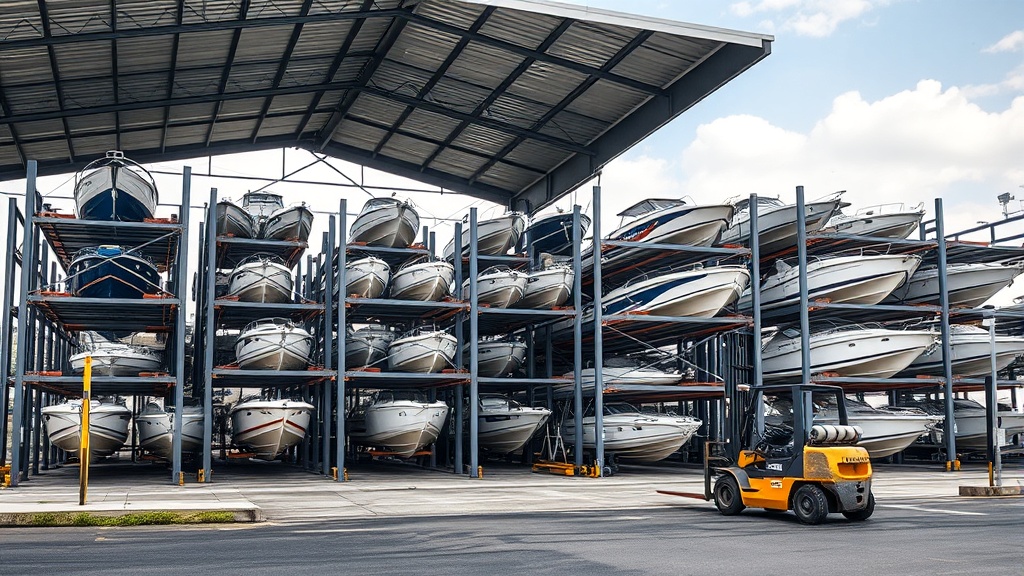
Of all the coverages a marina or boatyard can carry, none is more misunderstood — or more important — than Marina Operators Legal Liability, usually shortened to MOLL. Operators often assume their general liability policy protects customer boats while those vessels are in the yard. It does not. That single misunderstanding has bankrupted marinas after a fire, a dropped hull, or a storage rack collapse damaged dozens of boats they didn't own.
This article explains exactly what MOLL is, the legal concept behind it, why your general liability policy excludes the very losses MOLL is built for, and how to set your limits correctly.
The Bailee Relationship: Care, Custody, and Control
When a customer hands you their boat to haul, store, or repair, the law treats you as a bailee — someone temporarily entrusted with another person's property. As a bailee, you have a legal duty to exercise reasonable care over that property. If the boat is damaged while in your care because of your negligence, you can be held legally liable for the loss.
That relationship is created the instant a vessel comes into your care, custody, or control. And it happens constantly at a working marina or boatyard:
- Hauling a boat out of the water on a travel lift or trailer
- Blocking and storing a vessel on the hard
- Placing a boat into a dry-stack rack
- Moving a vessel between slips or around the yard
- Taking a boat into the shop for repair or winterization
- Splashing and relaunching at the start of the season
Every one of these activities puts an expensive boat you don't own under your control, and every one of them creates a potential bailee claim if something goes wrong.
Why General Liability Won't Cover It
Here is the trap. Commercial general liability covers third-party property damage — but it contains a near-universal exclusion for property in your care, custody, or control. The logic from the insurer's perspective is straightforward: a CGL policy is designed to cover accidental damage to property you have no responsibility over, not property you have voluntarily taken charge of.
So when you drop a hull off the travel lift, when a storage rack fails, or when a fire in your shop destroys three customer boats, your general liability carrier points to the care, custody, and control exclusion and denies the claim. The damage is real, the customer expects you to pay, but your foundational policy leaves you exposed.
MOLL exists precisely to fill that gap.
What MOLL Actually Covers
Marina Operators Legal Liability responds to your legal liability for physical damage to non-owned watercraft and their equipment while those vessels are in your care, custody, or control for storage, repair, hauling, mooring, or similar marina operations.
Typical Covered Scenarios
- A boat is dropped or damaged during a haul-out or launch
- A vessel is damaged while being moved between slips
- A dry-stack rack fails and damages the boats it was holding
- A fire, falling object, or yard accident damages stored customer vessels
- A boat is damaged during repair, service, or winterization work
What MOLL Does Not Do
MOLL covers your legal liability — meaning damage caused by your negligence or that of your employees. It is not a guarantee policy that pays for every loss regardless of fault. It also does not cover your own owned vessels (that's hull coverage) or third-party liability for bodily injury (that's general liability and P&I). It works alongside those policies, not in place of them.
Setting Your MOLL Limit Correctly
The most common MOLL mistake is buying too little. Your limit should reflect the total value of customer vessels that could be damaged in a single event, not the value of one average boat.
Think about your worst realistic scenario. If a fire swept through your dry-stack building, how many boats are racked inside, and what are they worth in aggregate? If your busiest storage row went up, what's the total exposure? A facility storing 80 boats averaging $150,000 each has more than $10 million sitting in its care on any given day. A MOLL limit of a few hundred thousand dollars would be catastrophically inadequate.
Key factors in setting your limit:
- Peak number of vessels in your care at one time
- Average and high-end value of the boats you handle
- Concentration risk — how many boats sit in one building or one row
- Storage type — dry stack, wet slip, and on-the-hard each carry different aggregation
- Contractual requirements from customers or storage agreements
Storage Agreements and Liability Caps
Many operators use storage and service contracts that include liability-limiting language. These agreements can help, but they are not a substitute for MOLL. Courts don't always uphold broad liability waivers, especially in cases of gross negligence, and a disclaimer won't satisfy a customer whose half-million-dollar yacht was destroyed. Strong contracts plus adequate MOLL is the right combination — neither alone is enough.
Protect Every Boat You Touch
If your marina, boatyard, or dry-stack facility takes customer vessels into its care for any reason, MOLL is not optional — it is the coverage that stands between a single bad day and the loss of your business. The care, custody, and control exclusion in your general liability policy guarantees you are exposed without it.
Contractors Choice Agency specializes in marina and boatyard programs and is licensed in all 50 states. Call us at 844-967-5247 or fill out our online quote form, and we'll size your MOLL limit to your real exposure and make sure no customer boat in your yard leaves you unprotected.